Tooth decay is one of the most common dental problems affecting children and adults alike. The good news is that tooth decay often begins silently, and if detected early, it can usually be treated with a simple filling rather than an expensive or painful procedure like a root canal.
Unfortunately, many people ignore the early warning signs because they are mild or painless. By the time severe pain develops, the decay may have already reached the nerve of the tooth.
At HealthyGo Dental Hospital, we encourage regular dental check-ups because identifying tooth decay in its early stages helps preserve your natural tooth, reduces treatment costs, and prevents unnecessary discomfort.
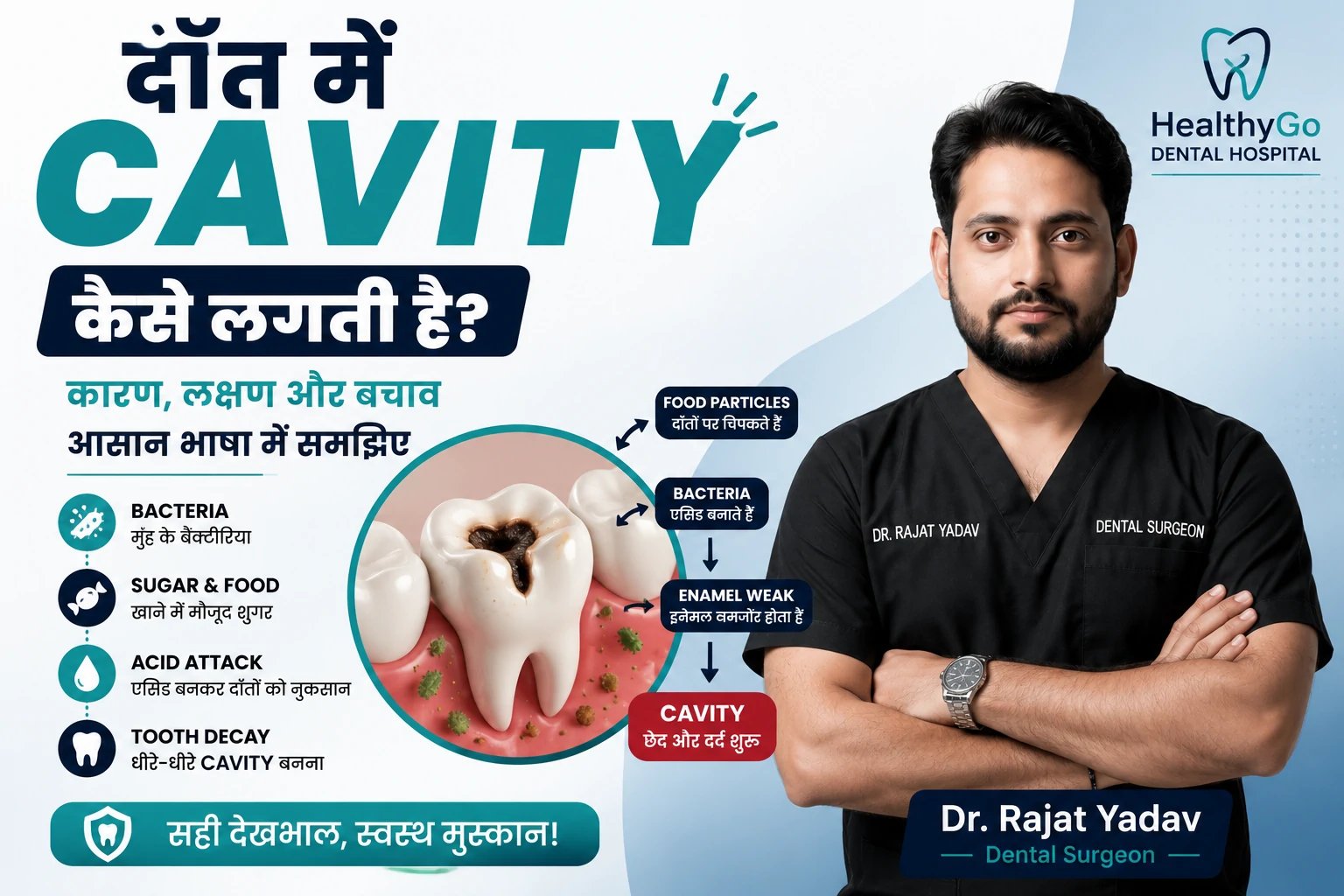
Tooth decay, also known as dental caries or a cavity, occurs when bacteria in the mouth produce acids that gradually dissolve the protective enamel of the tooth.
This process develops over time and usually progresses through different stages if left untreated.
The process of tooth decay begins when:
Without treatment, the decay continues deeper into the tooth, eventually affecting the dentin and the pulp, leading to pain and infection.
Finding tooth decay early offers several advantages:
Many people assume that a cavity always causes severe pain. In reality, early tooth decay often has subtle symptoms.
One of the earliest signs of tooth decay is the appearance of chalky white spots on the enamel.
These spots indicate that minerals are being lost from the tooth surface (demineralization).
At this stage:
Do your teeth hurt when you eat ice cream or drink hot tea?
Sensitivity to:
may indicate that the enamel has started to wear away or that early decay is exposing the underlying dentin.
Sensitivity should never be ignored, especially if it persists.
Early tooth decay may cause occasional discomfort rather than constant pain.
Patients often notice:
Because these symptoms come and go, many people delay visiting a dentist.
If food repeatedly gets trapped in the same area, it could indicate:
Ignoring this problem allows bacteria to remain in the area and accelerates decay.
Dark discoloration on a tooth is not always just a stain.
Brown, black, or dark spots may indicate that decay has progressed deeper into the tooth.
A dental examination is needed to determine whether the discoloration is harmless staining or active decay.
As decay progresses, tiny pits or holes may become visible.
Patients sometimes notice:
Once a hole has formed, the tooth cannot repair itself naturally and usually requires restorative treatment.
Persistent bad breath (halitosis) may be caused by:
If brushing does not improve bad breath, a dental check-up is recommended.
Advanced cavities may trap food and bacteria, causing an unpleasant taste.
This symptom often occurs when decay has progressed significantly.
Pain during chewing can occur when decay reaches deeper layers of the tooth.
It may indicate:
Prompt treatment can often prevent further damage.
If you notice:
the underlying cause may be extensive decay that has weakened the tooth structure.
The cavity reaches the dentin.
Symptoms include:
The infection reaches the nerve.
Symptoms include:
Root Canal Treatment is often required at this stage.
Untreated infection spreads beyond the tooth.
Symptoms include:
Immediate dental treatment is necessary.
Several factors contribute to cavity formation:
You may be more likely to develop cavities if you:
At HealthyGo Dental Hospital, early cavities are identified using:
A careful visual examination of every tooth.
Digital X-rays help detect:
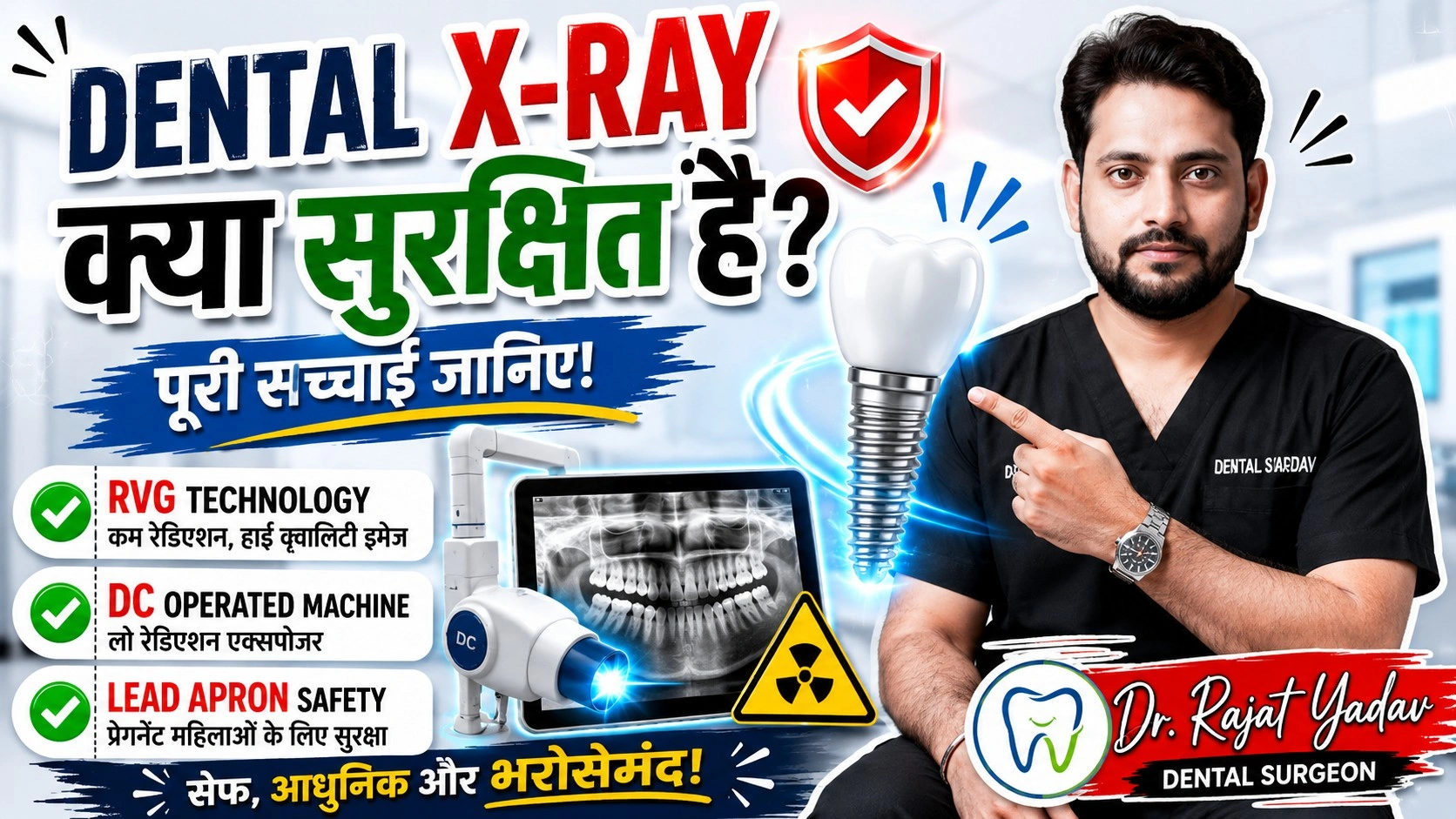
Our Digital RVG system provides high-quality images with low radiation exposure, allowing accurate diagnosis while prioritizing patient safety.
Treatment depends on the stage of decay.
Preventing cavities is easier and less expensive than treating them.
Use fluoride toothpaste and brush for at least two minutes.
Floss or use interdental brushes once a day.
Limit:
Water helps wash away food particles and supports saliva production.
Routine check-ups help detect problems before they become serious.
Scaling removes plaque and tartar that cannot be removed by brushing alone.
Fact: Early cavities often cause no pain.
Fact: Untreated decay in baby teeth can affect permanent teeth and overall oral health.
Fact: Once a cavity forms, professional dental treatment is usually needed.
Fact: Aggressive brushing can damage enamel and gums.
If decay is limited to early demineralization (white spot lesions), improved oral hygiene, fluoride, and dietary changes may help slow or reverse the process. Once a cavity forms, it usually requires dental treatment.
Common signs include sensitivity, food getting stuck, visible holes, discoloration, mild pain, or bad breath. A dental examination is the most reliable way to confirm the diagnosis.
Yes. Children are particularly susceptible to cavities, especially when oral hygiene is poor or sugary foods are consumed frequently.
Every six months for routine check-ups and professional cleaning, or more frequently if recommended by your dentist.
At HealthyGo Dental Hospital, we focus on early detection and minimally invasive treatment.
Our clinic offers:
We believe that preventing tooth decay is always better than treating advanced disease.
Tooth decay does not develop overnight. It usually begins with subtle warning signs such as white spots, sensitivity, mild discomfort, food getting stuck, or small areas of discoloration. Recognizing these early symptoms and seeking timely dental care can prevent more extensive treatment and help preserve your natural teeth.
If you notice any of these signs, don't wait for severe pain to develop. Early diagnosis and treatment are the keys to maintaining a healthy smile.
Visit HealthyGo Dental Hospital for a comprehensive dental examination and personalized preventive care.
© 2025 HealthyGo Dental Hospital